|
Let’s gossip. ͏ ͏ ͏ ͏ ͏ ͏ ͏ ͏ ͏ ͏ ͏ ͏ ͏ ͏ ͏ ͏ ͏ ͏ ͏ ͏ ͏ ͏ ͏ ͏ ͏ ͏ ͏ ͏ ͏ ͏ ͏ ͏ ͏ ͏ ͏ ͏ ͏ ͏ ͏ ͏ ͏ ͏ ͏ ͏ ͏ ͏ ͏ ͏ ͏ ͏ ͏ ͏ ͏ ͏ ͏ ͏ ͏ ͏ ͏ ͏ ͏ ͏ ͏ ͏ ͏ ͏ ͏ ͏ ͏ ͏ ͏ ͏ ͏ ͏ ͏ ͏ ͏ ͏ ͏ ͏ ͏ ͏ ͏ ͏ ͏ ͏ ͏ ͏ ͏ ͏ ͏ ͏ ͏ ͏ ͏ ͏ ͏ ͏ ͏ ͏ ͏ ͏ ͏ ͏ ͏ ͏ ͏ ͏ ͏ ͏ ͏ ͏ ͏ ͏ ͏ ͏ ͏ ͏ ͏ ͏ ͏ ͏ ͏ ͏ ͏ ͏ ͏ ͏ ͏ ͏ ͏ ͏ ͏ ͏ ͏ ͏ ͏ ͏ ͏ ͏ ͏ ͏ ͏ ͏ ͏ ͏ ͏ ͏ ͏ ͏ ͏ ͏ ͏ ͏ ͏ ͏ ͏ ͏ ͏ ͏ ͏ ͏ ͏ ͏ ͏ ͏ ͏ ͏ ͏ ͏ ͏ ͏ ͏ ͏ ͏ ͏ ͏ ͏ ͏ ͏ ͏ ͏ ͏ ͏ ͏ ͏ ͏ ͏ ͏ ͏ ͏ ͏ ͏ ͏ ͏ ͏ ͏ ͏ ͏ ͏ ͏ ͏ ͏ ͏ ͏ ͏ ͏ ͏ ͏ ͏ ͏ ͏ ͏ ͏ ͏ ͏ ͏ ͏ ͏ ͏ ͏ ͏ ͏ ͏ ͏ ͏ ͏ ͏ ͏ ͏ ͏ ͏ ͏ ͏ ͏ ͏ ͏ ͏ ͏ ͏ ͏ ͏ ͏ ͏ ͏ ͏ ͏ ͏ ͏ ͏ ͏ ͏ ͏ ͏ ͏
Greetings, Humans.Say what you want about Nashville, but this city has local journalism on lock. We’ve got your bigwig traditional (The Tennessean & Tennessee Tribune) and your upstart shitkickers (TN Holler). We’ve got investigative and analytical (Tennessee Lookout) and stately public media (WPLN). We’ve got an alt-weekly that should probably win awards (Nashville Scene) along with some up and comers trying their best to hang (East Nashvillian & Madisonian). We have a thriving podcast scene (CityCast Nashville, This is Nashville, and NashVillager). Our TV channel news doesn’t just cover local murders and shootings (WKRN News 2, WSMV 4), and if you come for the beloved NewsChannel 5 Phil Williams, I, the entire city of Nashville, and John Oliver will personally come haunt you in your dreams. (Also, shout out the greatest local news segment to ever air on TV.) If you’re a local news junkie like me, you’ll see that I’m missing a big one here—The Nashville Banner. The Nashville Banner is my hands-down favorite locals news outlet operating right now. They have a storied past, a strange amount of their journalists are named Steve, and they’re completely community-funded and non-profit. They are an embodiment of “news you can use,” news that is for the people, by the people. When ICE was out rounding people up in Nashville last week, the Banner responded with coverage and with a comprehensive, unfolding piece on how concerned citizens can support their communities. Recently, the Banner has been offering open office hours in the meeting rooms of our local libraries. Community members can visit with them, share tips, ask questions about the journalistic process, or just hang out. They posted up at the Madison Library a few days ago, which was very exciting for me because I rarely get to talk to reporting journalists that do the day to day grunt work a daily, local newspaper requires. Honestly, I don’t get a chance to talk to very many journalists in general and, not having been schooled in any of the journalistic arts, the imposter syndrome when I report a story is, well, high. I sat with them, ate some donuts, drank some coffee, and picked their brains on what it’s like to get a hot tip, what it’s like to report an evolving story, and most importantly for me, that universal “oh shit” feeling when you pitch a great story and then realize you have to actually report it. Turns out the imposter syndrome never goes away. So in this newsletter, I bring you an ode to journalism in all its forms. What’s your go-to source? A pox on anyone who says TikTok. More importantly, who’s your Phil Williams'-level journalist crush? Tell me, and let’s gossip.
|
|
We’re going way back with this one, for this one is my very first piece I ever pitched and published with Texas Highways. Picture it: April 2020. We’re in the height of the pandemic. I’m realizing that maybe I want to give this freelance writing thing a go. I see a call for pitches on Twitter (RIP) and Mike Hoinski with Texas Highways is looking for work. If there’s one thing I know, I know Texas. And Texas Highways was a special one for me—-my grandparents had subscribed to it for decades. I used to cut out pictures from the magazine to make my own little magazine for them, a hint at my future vocation. At the time, Mike must have been asking for essays because as I dig through old emails now, I see that I sent him a version of my essay, “Yankee,” which was later published with Pithead Chapel. Mike, being the very generous and super cool guy he is, responded to my essay submission (which looking back now totally wasn’t an appropriate submission for Texas Highways) with actual, thoughtful, constructive feedback on how to make it better, even though it wasn’t going to be a fit for the magazine. I wasn’t even disappointed when I got the rejection; I was amazed that an actual magazine editor actually spoke to me—-and with kind words for my work. With that, I made it my mission to grace the pages of Texas Highways. When I went home for the passing of my grandmother that May, I kept my eyes peeled for possible stories. I didn’t have to look far. So here it is, my first actual magazine pitch: Sent May 14, 2020: “Hey Michael, First off, thank you again for reading and providing feedback on my recent essay! I really appreciate it. I also have another story that I think would be perfect for Texas Highways and wanted to pitch to you first. I recently reconnected with an old friend from middle school who still lives in town (Giddings, TX) and was fascinated by his work as a restoration artist for monuments and gravestones. While much of his work involves the cleaning and maintenance of local cemeteries, he also does a fair amount of custom headstone design work—and it’s unlike anything I’ve seen in cemeteries before. For example, one family wanted to memorialize their uncle who was an avid motorcycle rider and Longhorn. My friend Jacob, who is known for his unique ability to create realistic engravings, gathered pictures of the uncle where the man has his longhorn hand raised high. But Jacob knew he couldn’t simply copy the UT symbol for the headstone. Instead, he took the picture of the man’s hand, enhanced it, and engraved it on the headstone, palm lines, veins, and all. (Picture attached.) For another family who lost their beloved grandmother, Jacob listened to their stories and learned that the grandmother had a favorite seat overlooking her land. So Jacob sat in her seat, took a picture of the landscape, and engraved that image to her headstone. Suffice it to say, I had no idea about this unique and under-the-radar art—and not many others do. Jacob tells me that much of the industry is run by family businesses that have been around for a century or more. He is of a new, flashy breed that does the custom work, though more and more are joining in to this special line of memorialization. It is striking to me how much of it is like tattoo artistry, and I think readers will be interested to learn about this aspect of the work. I would love to write a 1,500 piece about the graveyard artists of rural Texas, the traditions and techniques, and why it is this kind of work tends to remain in families for generation. I have already interviewed Jacob, and have identified several more restoration artists to contact as well. As you know, I am a writer in Nashville but am a Central Texan by birth. My stories and essays all feature aspects of rural Texas, most notably my piece “Dead Trees” published with wildness that detailed the 2011 wildfires in Bastrop. You can see more of my work on my website: https://www.lisabubert.com/ Would Texas Highways be interested in commissioning this piece?”
There’s so much here that I would have done differently. But even with those whoopsies, I got this response a mere six hours later: Thanks, Lisa. I add this to our list of pitches to discuss at our weekly editor’s meeting. I’ll let you know if there’s interest. --Mike
I responded ten minutes later, definitely not shitting my pants: Great, I appreciate it! Also — I will be traveling back home this weekend and can get some images to accompany the article as well, just in case. Thanks,
Lisa
Four days later, Mike emailed back: Lisa, we have a page in the magazine called My Hometown. Would you be interested in interviewing Jacob for that? If so, please email M__ J___ at (EMAIL.) He edits that page and expressed interest in the story. Meanwhile, we could take a cemetery-focused piece for the web, but I’d want to wait until October. Death is a tough topic right now, but in the fall we at least have Halloween to support it. What do you think? --Mike
What did I think? I think I’d finally gotten my break. A week later, I had a contract, an assignment, and an offer to cover travel expenses. I got to interview an old friend about the work he does for the community (picture me with my little phone on record, acting like I know what I’m doing), and the craziest part of all? I was getting paid to do it. Five years later, I’m a regular contributor to Texas Highways, a dynamic magazine that wins major awards year over year. I’ve been able to memorialize so much of my family’s culture in those pages, all because an editor took a chance on me. Just in case I don’t say it enough: THANK YOU, Mike Hoinski. Time from first pitch to editor response: 6 hours
Time from response to contract: 1 week
Time from pitch to published piece: 4 months
Drafts/rounds of edits: 1 round of edits after submitting first draft, 1 request for further reporting, 1 proofread of formatted piece
Pay: Baby’s first $600 Read the finished piece here: “Jacob Janda Preserves History and Memories in Giddings with Custom Gravestones”
|
|
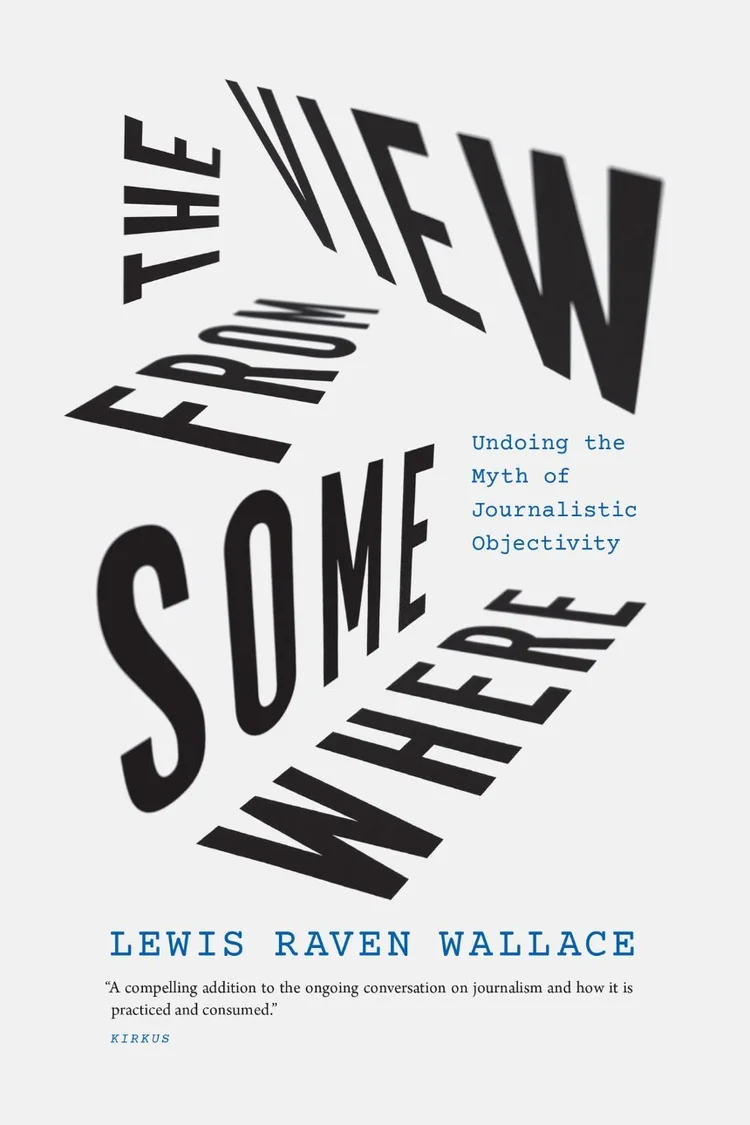
Let me continue my ode to journalism in this newsletter with this banger of a book, The View From Somewhere by Lewis Raven Wallace. Wallace is a transgender journalist who formally reported for NPR but was fired after penning a blog post questioning the concept of journalistic objectivity. Basically, Wallace contended, there can be no journalistic objectivity because everyone is taking the view from somewhere. Things look the way they look to you because of the context you exist in. And trying to say that journalists must be “objective” begs the question — objective to who? Once you start digging down on that question, it quickly becomes clear that the only acceptable objective view is the straight, white male point of view. Anything outside of that perspective is immediately questioned — can female reporters report objectively on reproductive rights? Can trans journalists be objective about the assaults to their existence? Can Black journalists be objective about police shootings? Apparently, white men can be objective on all those topics—-rarely is their point of view questioned. “‘Neutrality is dangerous: if one group can take a decidedly non-neutral point of view and get people to buy it on the grounds that it is neutral, the game is over,’ Ann Scales wrote in a 1992 article in the UCLA Women’s Law Journal. Scales pinpointed the trouble: we depend on subjective interpretation to decide what is neutral, and those subjective decisions about the neutrality tend to uphold the perspectives of those defining the terms of the debate. In other words, ‘objectivity’ always protects the status quo, interpreting the powerful as ‘neutral’ because it is why who create the frame—and (bad actors) can easily exploit it.”
If you are like me and are journalism-curious but journalism-unschooled, this is a great book to read. My fear is always that I will break an ethical rule I didn’t know existed when reporting. But reading this book helped me realize how subjective those rules are. Sometimes the best person to report a story really is the person who is closest to the story. Who else is more likely to get it exactly right? “What is the climate in which editors at newspapers and radio shows should consider standing up for something they believe in? Does the temperature need to rise above a certain level, globally, before our collective survival starts feeling more important than individual careers? Or, taking the use of the word ‘climate’ less literally, are these ethical individuals awaiting a more liberal environment before they air their liberal views, so that they can do so without consequence? Or maybe they’re awaiting a more authoritarian environment—a world of more disappeared children or ‘enhanced interrogation’ or perhaps more white supremacist or homophobic violence—-before they stand up for a reporter who would dare to question those forms of violence. Regardless, ‘not in the current climate’ reflects the kind of moral relativism and weakness with which I have grown impatient… Waiting around for the climate to change is a privilege some of us simply can’t afford.”
*** Check this book out from your local library, buy it from Bookshop.org or ask your favorite local bookseller to order it for you. Whatever you do, do not buy it from A*azon. *** Other books I read this month: Beta Vulgaris by Margie Sarsfield
We Never Took A Bad Picture by Ashley Roth
White Oleander by Janet Fitch
|
Class Is In Session!I have two classes coming up with the Porch this June! These classes are offered via Zoom so you can take them from anywhere, even if you’re not in Nashville.
|
|
Monday, June 9
6:00-8:00 PM Central Online via Zoom
$51 for Porch members / $60 for non-members The traditional publishing world—dominated by the "Big 5" (the five largest publishing houses)—often involves securing a literary agent and following a specific path to publication. But there are many other ways to bring your book to life, whether it's a novel, memoir, short story collection, or poetry chapbook. This class explores alternatives to traditional publishing, including direct submissions to publishers without an agent (non-agented submissions), working with independent (indie) publishers, pursuing hybrid publishing models (a blend of traditional and self-publishing), partnering with non-profits or academic presses, and other creative options to get your work into print.Through an engaging presentation, you’ll gain a clear understanding of these paths, their advantages and challenges, and which might be right for you. Following the presentation, guided exercises will help you map out possible publishing routes for your manuscript. The session concludes with an open Q&A to address specific questions about your own project. Sign up here.
|
|
Monday, June 16
6:00-8:00 PM Central Online via Zoom
$51 for Porch members / $60 for non-members Comparative titles, also known as “comps,” are essential tools for writers preparing to pitch their book to an agent or pursue alternative publishing paths. Comps give prospective readers, agents, or editors an immediate sense of the flavor, tone, and audience for your work. A well-chosen comp helps agents position your book when pitching to editors, while giving editors the context they need to champion your project and close the deal. But how do you find the right comps? Led by a librarian who specializes in connecting readers to books, this workshop will include a short presentation and hands-on exercises. You’ll learn how to use library tools and resources to uncover strong comps and analyze examples of effective comp title usage. Whether you’re preparing a query letter, proposal, or pitch, this class will help you identify comps that make your project shine. A final Q&A will provide time to address your specific questions. Sign up here.
|
|
A terrible picture of a beautiful morning.
Coffee, two books, a bed, and bed hair.
|
So long, farewell!(Psst… Like what you read in this newsletter? Toss a tip in the virtual tip jar.
Venmo: @lisa-bubert)
|
|
|
|