Let’s gossip. ͏‌ ͏‌ ͏‌ ͏‌ ͏‌ ͏‌ ͏‌ ͏‌ ͏‌ ͏‌ ͏‌ ͏‌ ͏‌ ͏‌ ͏‌ ͏‌ ͏‌ ͏‌ ͏‌ ͏‌ ͏‌ ͏‌ ͏‌ ͏‌ ͏‌ ͏‌ ͏‌ ͏‌ ͏‌ ͏‌ ͏‌ ͏‌ ͏‌ ͏‌ ͏‌ ͏‌ ͏‌ ͏‌ ͏‌ ͏‌ ͏‌ ͏‌ ͏‌ ͏‌ ͏‌ ͏‌ ͏‌ ͏‌ ͏‌ ͏‌ ͏‌ ͏‌ ͏‌ ͏‌ ͏‌ ͏‌ ͏‌ ͏‌ ͏‌ ͏‌ ͏‌ ͏‌ ͏‌ ͏‌ ͏‌ ͏‌ ͏‌ ͏‌ ͏‌ ͏‌ ͏‌ ͏‌ ͏‌ ͏‌ ͏‌ ͏‌ ͏‌ ͏‌ ͏‌ ͏‌ ͏‌ ͏‌ ͏‌ ͏‌ ͏‌ ͏‌ ͏‌ ͏‌ ͏‌ ͏‌ ͏‌ ͏‌ ͏‌ ͏‌ ͏‌ ͏‌ ͏‌ ͏‌ ͏‌ ͏‌ ͏‌ ͏‌ ͏‌ ͏‌ ͏‌ ͏‌ ͏‌ ͏‌ ͏‌ ͏‌ ͏‌ ͏‌ ͏‌ ͏‌ ͏‌ ͏‌ ͏‌ ͏‌ ͏‌ ͏‌ ͏‌ ͏‌ ͏‌ ͏‌ ͏‌ ͏‌ ͏‌ ͏‌ ͏‌ ͏‌ ͏‌ ͏‌ ͏‌ ͏‌ ͏‌ ͏‌ ͏‌ ͏‌ ͏‌ ͏‌ ͏‌ ͏‌ ͏‌ ͏‌ ͏‌ ͏‌ ͏‌ ͏‌ ͏‌ ͏‌ ͏‌ ͏‌ ͏‌ ͏‌ ͏‌ ͏‌ ͏‌ ͏‌ ͏‌ ͏‌ ͏‌ ͏‌ ͏‌ ͏‌ ͏‌ ͏‌ ͏‌ ͏‌ ͏‌ ͏‌ ͏‌ ͏‌ ͏‌ ͏‌ ͏‌ ͏‌ ͏‌ ͏‌ ͏‌ ͏‌ ͏‌ ͏‌ ͏‌ ͏‌ ͏‌ ͏‌ ͏‌ ͏‌ ͏‌ ͏‌ ͏‌ ͏‌ ͏‌ ͏‌ ͏‌ ͏‌ ͏‌ ͏‌ ͏‌ ͏‌ ͏‌ ͏‌ ͏‌ ͏‌ ͏‌ ͏‌ ͏‌ ͏‌ ͏‌ ͏‌ ͏‌ ͏‌ ͏‌ ͏‌ ͏‌ ͏‌ ͏‌ ͏‌ ͏‌ ͏‌ ͏‌ ͏‌ ͏‌ ͏‌ ͏‌ ͏‌ ͏‌ ͏‌ ͏‌ ͏‌ ͏‌ ͏‌ ͏‌ ͏‌ ͏‌ ͏‌ ͏‌ ͏‌ ͏‌ ͏‌ ͏‌ ͏‌ ͏‌ ͏‌ ͏‌ ͏‌ ͏‌ ͏‌ ͏‌ ͏‌ ͏‌ ͏‌ ͏‌ ͏‌ ͏‌ 
All Things Words  | Writing and Editing
 

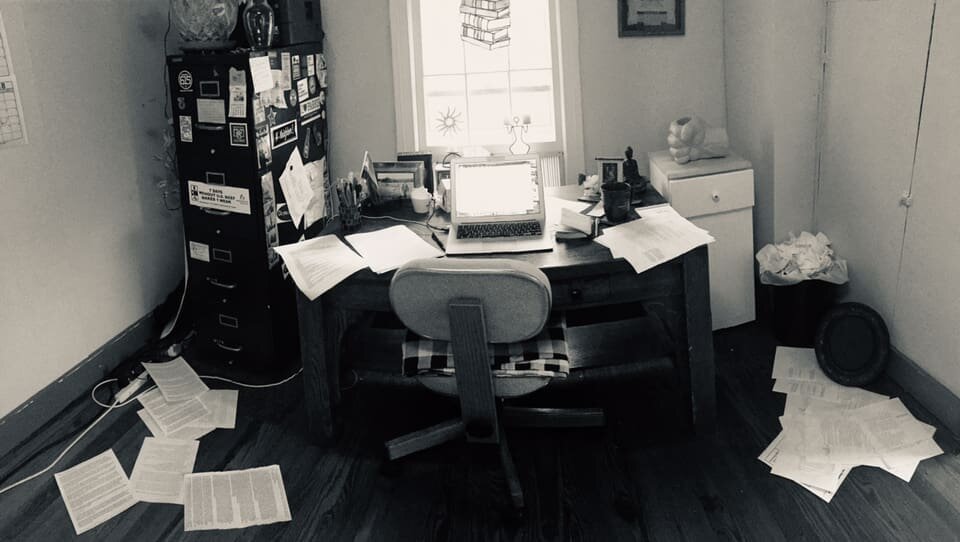
Hello from the Writing Attic!

I had coffee with a writer pal of mine this past weekend. It’s been a minute since I’ve had coffee with this particular friend, because, you know, the pandemic. I love coffee with this fellow writer because here’s what always happens when we meet up: time stops. We blink and the coffee is cold and it’s three hours past and we never noticed because we were having too much fun talking about stuff that actually mattered.

That was a big topic of conversation: what actually matters in writing? Specifically, what is it about the whole act of writing that matters? The editing, the submitting, the contracts, the promoting of accepted work in journals and publications that are just a drip in the daily deluge of written content… After all, both of our day jobs (which are both in helping professions) felt themselves like drips of compassion in the daily deluge of suffering and pain. Compared to the state of the world, writing felt like an overly indulgent and increasingly selfish refuge.

I’m currently reading Joan Didion’s collection Slouching Towards Bethlehem and was thrilled to see that she too asks this same question in the very prologue of the book. Or specifically, she says she had not been able to work in months because she “had been paralyzed by the conviction that writing was an irrelevant act.”

Three cheers for writer angst! You can be one of the most widely-read journalists publishing in some of the most widely-read publications and still feel like none of it matters in a world overflowing with extreme anguish. Didion goes on to say, “If I was to work again at all, it would be necessary for me to come to terms with disorder.”

Disorder is the water we’re swimming in. Of course, disorder is the water we’ve always swam in—which brings me back to my last newsletter where I spoke of ditching numbers. Numbers were the way my friend and I came to terms with the disorder of our own worlds. Sending ten pitches a month would surely protect against the feeling of not being enough. Writing five new pieces in a year would surely prove that we were real people.

We hadn’t felt real in some time. In fact, we felt terribly lonely. The Zooms, the virtual programs, the isolated work from home. The quiet. All of it lacking in reality. No amount of submissions or publications were going to cure it.

After all, the holy grail of writing isn’t the publication of the piece—it’s the response to it. It’s someone reading the work, seeing themselves reflected in it, and telling us that yes, they were down in the shit ditch with us too. Welcome. We sipped our coffees, fully realizing that if there was a shit ditch, then we were both in it, and at least we were in it together.

Perhaps writing is an irrelevant act. But isn’t everything irrelevant in the face of disorder? Little sparks of meaning still flash here and there, like fireflies in the grass, easily missed if we hadn’t had the luck to catch their light. You want to grab a cup of coffee and talk about what actually matters? No time like the present.

So welcome to the shit ditch. Pull up a chair. Grab a cup of coffee.

Now let’s gossip.


Submission Success Story: “Organic Matter” by Lee Conell, for Guernica

Speaking of good friends who are happy to be in the shit ditch with you, I am so pleased to be able to share this story from Lee Conell, a beautiful piece of flash fiction that makes me want to sink into the ground in the best, possible way. I met Lee through her Writing the Weird class taught with The Porch, which remains one of the best class experiences I’ve had. What can I say, weirdos recognize weirdos.

Go ‘head, Lee:

In 2019, I got really into baths. I was living in a studio apartment in Tokyo, and while the the main area of the apartment was small, the bathroom contained a very large, very good tub. I'd never really been a long-bath person, but suddenly I was converted. When I moved to New York City at the beginning of 2020, I had no idea how essential my new bath routine would be for keeping my sanity in tact during the worst of the pandemic. During the bulk of 2020 and 2021 I was having a lot of trouble writing—I’d sit at my computer and end up just reading the news or worrying about the news—but in the bath I could start to move away from that loop. It felt like a creative space. I had never really written about a character in a bath, despite the fact that it had become a restorative place for me, and started to wonder what it would look like to have a story begin in a tub. I was also thinking a lot about friends of mine who had kids, and who were continuing to juggle parenthood with a changed world. A part of me just wanted to give them a good hourlong rest in a nice internet-free bath. Once that desire showed up, the rest of the story fell quickly into place. (I’ve also long been fascinated by mycology but had no idea some part of my brain was thinking about fed-up mothers connecting with mycological networks via, um, tubs filled with soil. Who knew?)

As I was wrapping up this story, I saw Guernica magazine had a call for a special issue on dirt. “Organic Matter” felt like a good match for an issue around that theme, for obvious reasons.  I was happy Guernica agreed and I loved working with the special issue’s editor, Michele Moses—she really helped me lean into the story’s tiny world, to essentialize it in the exact right places. Another cool development with the story stemmed from an energizing dialogue with a visual artist, Ashley Williams. I’d met Ashley during a residency (check out her amazing work here: https://www.aerofauna.com/) and we’d started this process of responding to one another’s work: I’d write flash fiction-ish things based on her paintings, and she would respond to my writing with images. In these exchanges, writing stories was not just an act of world-building but one of friendship (and aren’t friendships their own little worlds?). I sent a very early version of “Organic Matter” to Ashley and she made an incredible image of a woman lying in a tub of dirt, surrounded by constellations of star-like fungi. After the story was accepted by Guernica, I showed Michele the image Ashley made, and she contacted the art department to see if we could run it alongside my piece. So much of "Organic Matter" is about women connecting even in moments of anxiety and isolation, and so having this connection I made with Ashley on display alongside the story itself is especially meaningful to me.

In another full circle moment, the story is being translated into Japanese soon, so fingers crossed it will appear in that form somewhere soon! I like to think of someone there reading it in a studio apartment after an excellent bath.

Here’s the stats: 

# Drafts before submission: My revision process itself probably could use some revisioning—it’s very piecemeal and messy, and not in a fun dirt bath way—so I’m not totally sure about the number here. Maybe 3-4, if you put all the tiny revision dash sessions together? I also had a strange experience with this story—after I submitted it to Guernica, I panicked about it and kept working on it, doubling its length, before eventually realizing the original shorter version was stronger. I find I often have a self-doubt revision after what’s actually my final revision. Like I said—messy.

Response time from Accepting Publication: 70 days

Total rejections received before an acceptance:  I sent this piece out to two places and withdrew it from the other publication upon acceptance from Guernica. So technically no rejections, which, to be clear, is not at all normal. I like to think this is the universe giving me a pass after many, many (!) rejections since I’ve started sending work out to literary magazines.

2 submissions total. 1 withdrawal, 1 acceptance. 

Pay:   $150


Must-Read: “Have We Forgotten How to Read Critically?” by Kate Harding for DAME Magazine

Raise your hand if you hate hot takes! (Raises all my hands and feet.)

I hate hot takes. I despise hot take culture. Hot take culture cheapens reading. It makes every read a race to respond. Yes, I know I just said that the best part of writing is the response to writing BUT let me amend that to say that the best part of writing is thoughtful responses to writing, responses that are meant to be actual conversations, not gotchas for likes.

As Harding says of herself in the piece: “I am an old woman yelling at a cloud. I know this.”

Still, I loved this piece and I loved the call for more measured reading, for slow reading, and for the rejection of the “bespoke response", i.e., the hot take.


Celebrations Required!

  • Congratulations to writer friend, Nina Adel, on the publication of her recent flash fiction, Home Economics for Girls with Dead Mothers, with Flash Fiction Magazine!

  • My story, Intruder, is officially out in the latest issue of Cream City Review. It’s a scandalous story. Too scandalous for my mother to read, so stop looking for it Mom!!

Congratulations to all!


! Access the Newsletter Archive !

One final word — it occurs to me that people new to the newsletter might like to be able to read past issues. All past issues of the newsletter are available here.

And send some of your shit ditch friends this way, why don’t cha?


Until next time…

(Psst… Like what you read in this newsletter? Toss a tip in the virtual tip jar.
Venmo: @lisa-bubert)

All Things Words  | Writing and Editing
twitter instagram

All Things Words, Lisa Bubert, Nashville, TN , USA

Unsubscribe